Restricted Jail Footage Used to Solicit Super Chats After Critics Were Trespassed for Recording in Public Lobby
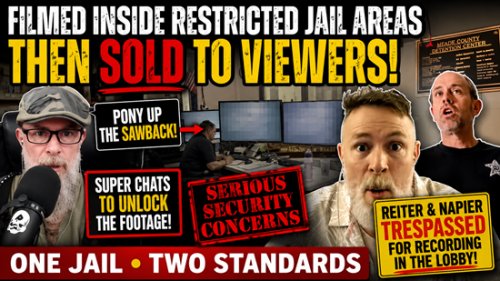
This article is based on screenshots and transcript excerpts reviewed by Georgia Transparency. The available material shows Bryant soliciting paid Super Chats before presenting portions of the jail footage and discussing paid membership access to additional content. The screenshots appear to show the jail’s control room and medical workspace. This article does not allege that any identified person committed a criminal offense. It raises questions concerning security, privacy, monetization, media access, favoritism, government accountability, and the consistent enforcement of jail policies.

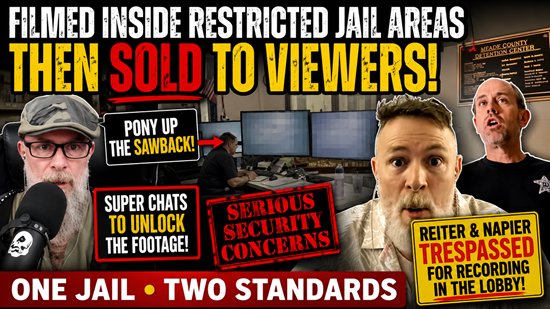
Questions surround J.J. Scarborough’s decision to grant Todd Bryant access to the Meade County jail’s control room and medical area
MEADE COUNTY, Ky. — Elected Meade County Jailer J.J. Scarborough is facing serious questions over his decision to allow YouTube personality Todd Bryant to record inside restricted and security-sensitive areas of the Meade County Detention Center.
The footage appears to show Bryant receiving access beyond the areas normally available to the public, including the jail control room and medical or infirmary workspace. Bryant later presented portions of that footage during a monetized YouTube livestream, where he repeatedly pressured viewers to send paid Super Chats before he would play the video.
The incident becomes even more controversial when compared with Scarborough’s treatment of Christopher Reiter and Tiffany Napier, who were reportedly trespassed from the same jail for recording inside its publicly accessible lobby.
The contrast presents a troubling question:
Why were Reiter and Napier removed for recording in a public area while Bryant was permitted to film behind secured doors and later use that footage to generate revenue from his audience?
Recording Inside the Jail’s Control Room
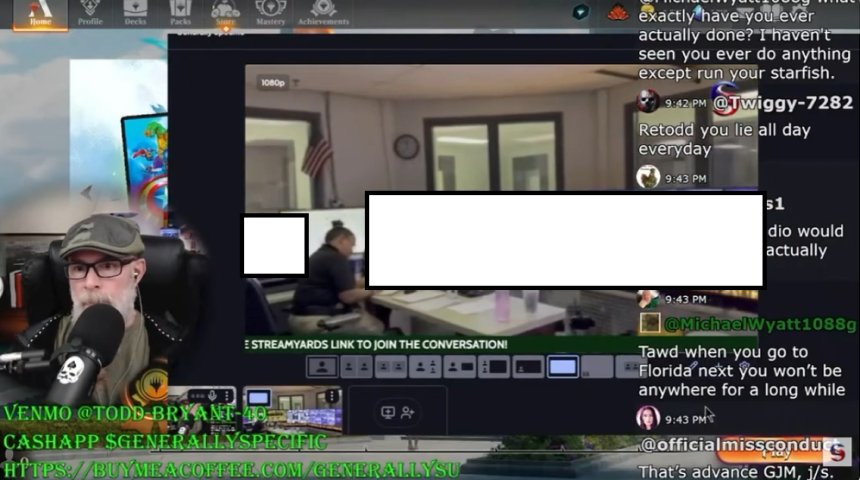
One portion of the video shows a jail employee seated inside what was identified as the facility’s control room. We censored the display screens for security purposes.
A large bank of monitors can be seen displaying numerous surveillance camera feeds from throughout the detention center. The footage provides viewers with a look inside an operational area responsible for monitoring activity and controlling movement within the jail.
During the recording, the control room was described as continuously staffed:
“This is what we call the control room. There’s somebody in here 24…”
The discussion then turned to electronically controlled doors.
Bryant asked what would happen if a control-room employee accidentally selected or unlocked the wrong door. A jail representative explained that certain important perimeter doors required two separate computer actions before they could be opened, describing the process as a redundant safety measure.
That discussion went beyond a general tour. It exposed viewers to information concerning the jail’s internal monitoring environment and aspects of its electronic door-control procedures.
The visible surveillance screens raise additional concerns. Depending on the clarity of the original footage, the camera feeds could potentially reveal:
- Surveillance-camera locations and coverage;
- Areas with limited camera visibility;
- Staff posts and movement patterns;
- Inmate housing or movement;
- Security-response practices;
- Restricted corridors or access points; and
- The layout and operation of the control station.
Even when filming is authorized, sensitive information is commonly reviewed, blurred, redacted, or removed before publication. It remains unclear whether jail officials reviewed Bryant’s recording before it was broadcast over the internet.
Medical and Infirmary Areas Were Also Recorded
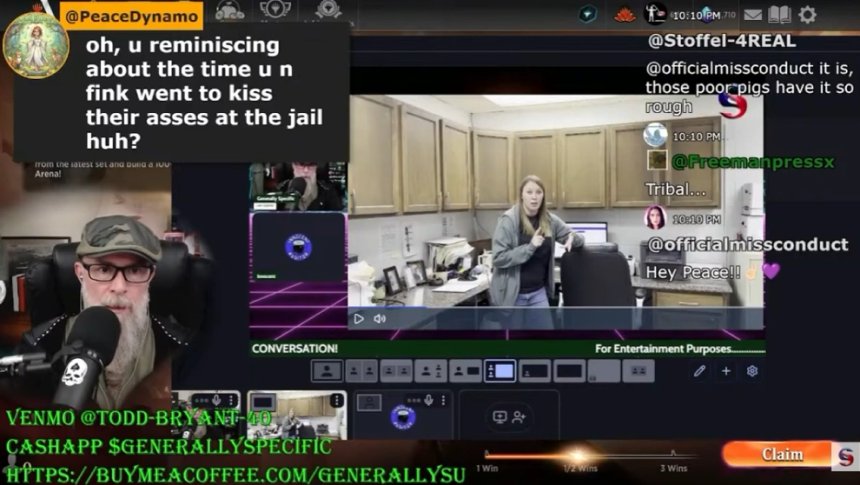
Another portion of the video was introduced as the jail’s medical area.
The footage shows an employee discussing the delivery of medical services inside the detention center, including treatment procedures, emergencies, prisoner isolation, dental services, medical costs, and the removal of other inmates while a patient receives care.
The conversation included an explanation that inmates may need to be removed from an area during a medical emergency so personnel can isolate and treat a patient safely.
Filming inside a jail’s medical workspace presents concerns beyond physical security. Medical areas may contain confidential records, computer screens, appointment information, medication details, patient identities, and other sensitive information.
The screenshots reviewed do not independently establish that protected medical information was publicly disclosed. They do establish that Bryant was permitted to record inside a workspace where private medical information could have been present.
That makes the following questions essential:
- Were all papers and computer screens inspected before filming?
- Were inmates present or identifiable?
- Did any inmate consent to being recorded?
- Were medical records, schedules, or treatment information captured?
- Was the footage reviewed and approved before publication?
- Were any portions required to be blurred or removed?
Viewers Told to “Pony Up” Before Seeing the Footage
The security concerns are only one part of the controversy.
During the livestream, Bryant did not simply play the jail footage as part of an ordinary news presentation. He repeatedly encouraged viewers to send money and counted down the number of paid contributions needed before he would show the content.
Bryant told his audience:
“We just need four more, boys and girls. Four more.”
When a viewer expressed interest in seeing the jail footage, Bryant responded:
“If you’re really that excited, why don’t you pony up?”
He then referenced a ten-dollar contribution:
“Pony up the sawback.”
As payments arrived, Bryant continued counting:
“All right, three away. We’re three away, guys.”
He then corrected himself:
“No, we’re two away. Holy crap.”
Bryant also openly described the exchange as viewers paying to receive something of value:
“I think you guys like to pay for something. I think you like to feel as though you’re getting a little bit of bang for your buck, and I’m here for it, guys.”
After the required support was apparently received, Bryant began playing portions of the jail video.
He later discussed placing additional content behind a paid YouTube membership level:
“I was thinking about making it the highest tier, but maybe we’ll go mid-tier.”
Those statements make the financial nature of the presentation difficult to dispute.
This was not merely a case of a viewer sending an unsolicited donation while Bryant independently aired a report. Bryant directly used the promised presentation of restricted-area jail footage to encourage payments, tracked the number of contributions, and discussed reserving additional footage for paying members.
That conduct supports describing the video as monetized and commercially exploited content.
Whether it meets a particular legal definition of “commercial use” would depend on the statute, policy, agreement, or legal claim at issue. However, from a practical standpoint, Bryant used privileged access to a government detention facility as an incentive to generate private revenue.
Public-Lobby Recording Resulted in Trespass
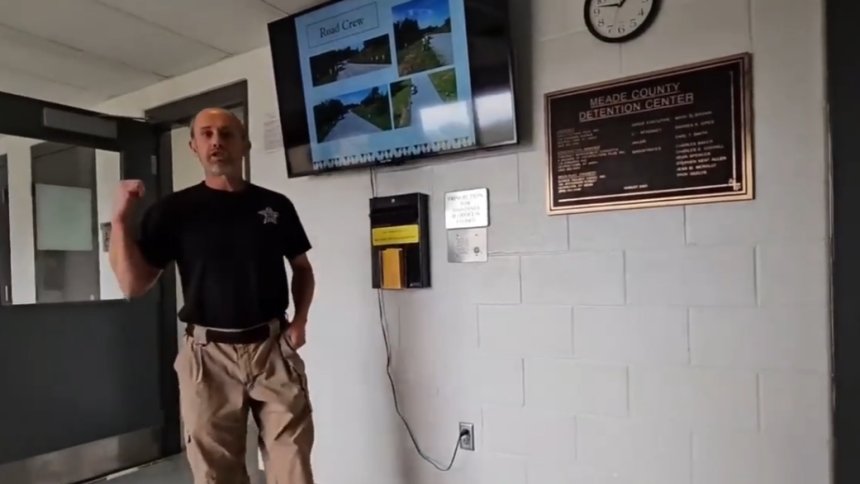
The access granted to Bryant stands in stark contrast to the jail’s prior treatment of Christopher Reiter and Tiffany Napier.
Reiter and Napier were reportedly trespassed from the Meade County Detention Center after recording inside the jail’s publicly accessible lobby.
They were not filming inside the control room.
They were not standing in front of active surveillance monitors.
They were not being shown the jail’s electronic door-control system.
They were not recording inside the medical or infirmary area.
They were recording in the public lobby.
Yet Reiter and Napier were removed and prohibited from returning, while Bryant was apparently escorted through restricted areas and allowed to create exclusive content that he later used to solicit Super Chats and promote paid memberships.
The disparity raises serious concerns about selective treatment.
Government officials may impose reasonable and neutral restrictions inside detention facilities. Security-sensitive areas are not ordinarily open to unrestricted public access, and jail administrators have legitimate authority to control who enters them.
Those restrictions, however, should be applied consistently. Access should not depend on whether the person holding the camera is considered friendly or critical toward jail leadership.
Was Access Based on Favoritism or Viewpoint?
The contrasting treatment of Bryant, Reiter, and Napier raises questions that Scarborough should answer publicly.
Why was recording considered unacceptable when Reiter and Napier were standing in a public lobby, but acceptable when Bryant was inside secured operational areas?
Was Bryant’s access based on a written media policy?
Would the same access have been granted to Reiter, Napier, Georgia Transparency, or another outlet known for criticizing Scarborough?
Were applications or requests for media tours available to all journalists under the same conditions?
Did Bryant receive special access because of his past relationship with Scarborough?
Was Bryant expected to produce favorable coverage of the jail?
Was Scarborough aware that Bryant intended to monetize the footage or place portions of it behind a paid membership wall?
Did the jail place any restrictions on the footage’s publication, editing, sale, or commercial use?
Unequal access based on personal relationships or the anticipated viewpoint of the resulting coverage would raise concerns far beyond poor judgment. A public official should not use government property and restricted government access to reward friendly media personalities while excluding or punishing critics.
Permission to Record Is Not Necessarily Permission to Sell
Even assuming Scarborough had the authority to permit Bryant to enter and record inside restricted areas, that does not automatically answer whether Bryant had unlimited authority to publicly distribute and monetize everything captured.
There is an important difference between:
- Permission to enter;
- Permission to record;
- Permission to publish;
- Permission to display security-sensitive information;
- Permission to use the footage commercially; and
- Permission to place the footage behind paid access.
A responsible authorization process should clearly establish what may be filmed, what must remain confidential, what requires redaction, and whether the resulting material may be monetized.
It remains unknown whether Bryant signed any media-access agreement, confidentiality acknowledgment, waiver, security agreement, or release.
It is also unknown whether the Meade County Detention Center retained any right to inspect or approve the footage before publication.
Government Access Became a Private Revenue Opportunity
Bryant did not obtain this footage by independently observing the jail from a public location. He apparently received government-authorized access to areas unavailable to the general public.
That access created exclusive content.
Bryant then used the exclusivity of that content to encourage viewers to send money.
This creates a direct connection between a benefit granted by an elected public official and a revenue opportunity for a private YouTube channel.
The public deserves to know:
- What public purpose was served by granting Bryant access;
- Whether the same opportunity was available to other media outlets;
- Whether the county authorized monetization;
- Whether taxpayers received any benefit;
- Whether Scarborough knew the footage would be sold to viewers;
- Whether security personnel approved the release;
- Whether jail employees consented to being used in monetized content; and
- Whether any corrective action has been taken.
Serious Security Questions Cannot Be Dismissed as Internet Drama
Bryant’s livestream included repeated commentary about online critics, auditors, and personal disputes. However, the underlying issue is not internet drama.
The issue is the administration of a county jail.
A detention facility has an obligation to protect inmates, employees, medical information, surveillance capabilities, emergency procedures, and the integrity of its security systems.
Allowing a private content creator to record inside restricted areas creates foreseeable risks. Broadcasting that footage to an unlimited internet audience increases those risks. Using the footage to solicit payments adds another layer of concern because it creates an incentive to release more exclusive or sensitive material.
This is especially difficult to justify when two critics were reportedly trespassed for recording in an area open to the public.
Questions for J.J. Scarborough
Georgia Transparency believes Scarborough should publicly answer the following questions:
- Did you personally authorize Todd Bryant to record inside the jail’s control room and medical area?
- Was Bryant given written permission, and did that permission authorize monetization or paid distribution?
- Were the surveillance monitors and electronic door-control procedures reviewed for security risks before publication?
- Did jail officials inspect the completed footage and require any blurring, redaction, or removal?
- Were any inmates, medical information, security procedures, or confidential materials captured?
- Why were Christopher Reiter and Tiffany Napier trespassed for recording in the public lobby while Bryant was granted access to restricted areas?
- Would the same access have been granted to journalists or citizens who had previously criticized you?
- Did Bryant sign a confidentiality agreement, media agreement, security acknowledgment, or release?
- Did you know Bryant intended to require Super Chats or paid memberships before showing the footage?
- Have you asked YouTube or Bryant to remove or redact any footage that may create a security or privacy concern?
The Public Deserves Transparency
Scarborough is not the owner of a private attraction. He is an elected official responsible for the operation and security of a public detention facility.
The control room is not a movie set.
The jail’s surveillance feeds are not premium entertainment.
The medical area is not members-only content.
Government officials should not trespass critics for recording in a public lobby while allowing a favored YouTube personality to enter secured areas, record sensitive operations, and use the resulting footage to collect money from viewers.
At minimum, this incident reflects a serious failure of judgment and consistency.
It may also reveal a broader problem involving preferential access, monetization of government-granted privileges, and the selective enforcement of recording restrictions based on who is holding the camera.
The citizens of Meade County deserve a full explanation of why Todd Bryant was given this access, what safeguards were imposed, whether the footage was reviewed, and why Christopher Reiter and Tiffany Napier were treated so differently.
Until those questions are answered, the appearance of a glaring double standard will remain.
Share
What's Your Reaction?
 Like
0
Like
0
 Dislike
0
Dislike
0
 Love
0
Love
0
 Funny
1
Funny
1
 Angry
1
Angry
1
 Sad
1
Sad
1
 Wow
2
Wow
2