Copyright Strike After Courthouse Reporting: William “Billy” Barthel Attempts to Silence Georgia Transparency’s Coverage

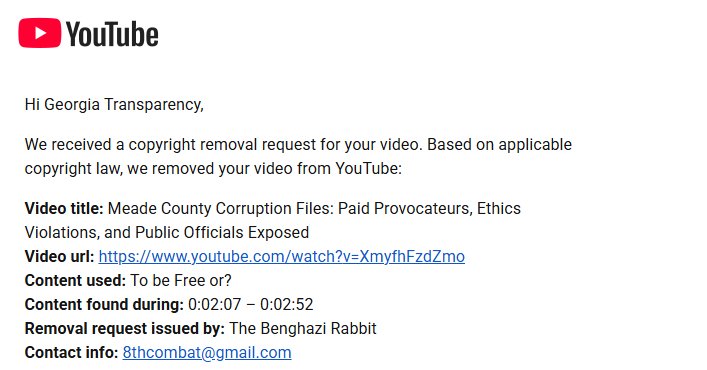
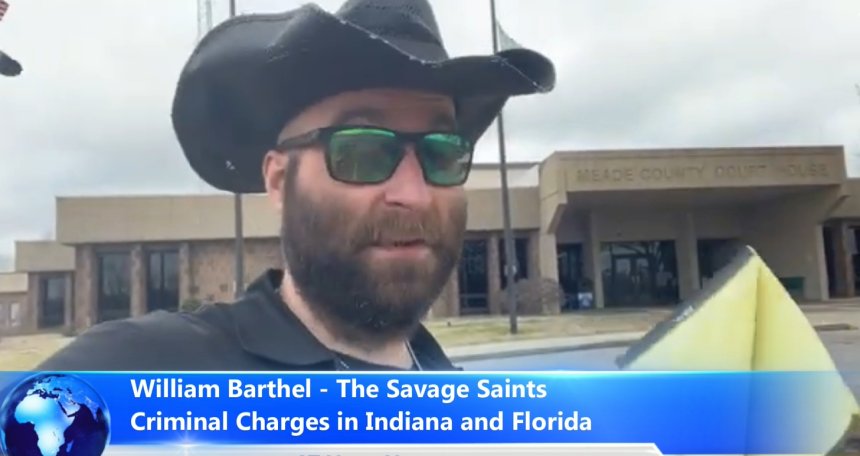
Georgia Transparency received a copyright strike after using a brief clip of William “Billy” Barthel reporting outside the Meade County courthouse in a larger news report. Georgia Transparency maintains the use was protected fair use because the clip was limited, transformed through original narration and analysis, and used for criticism and news reporting rather than as a substitute for Barthel’s video.

Copyright Strike After Courthouse Reporting: William “Billy” Barthel Attempts to Silence Georgia Transparency’s Coverage

MEADE COUNTY, KENTUCKY — Georgia Transparency has received a copyright strike after publishing a news report examining William Joseph “Billy” Barthel, his public conduct, his criminal cases, and unresolved questions arising from the estate of his late spouse, Andrea Mathews.

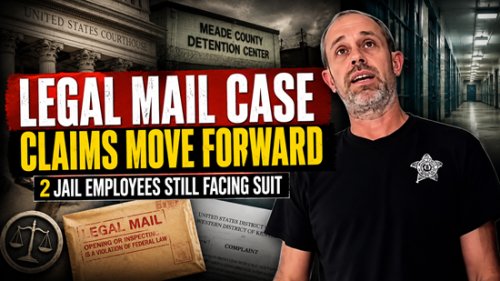
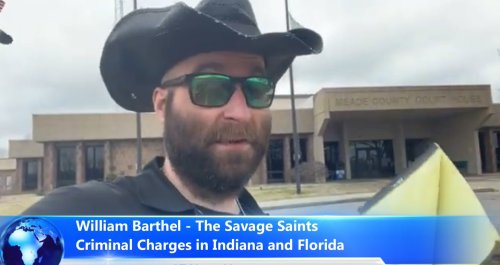
The removal request targeted approximately 45 seconds of a nearly six-minute Georgia Transparency report. The disputed segment showed Barthel reporting outside the Meade County courthouse—a public setting directly connected to the subject of the story.

The copyright complaint was submitted under the name “The Benghazi Rabbit.” Rather than confronting the reporting with contrary evidence, a correction request, or an on-the-record response, the claimant used YouTube’s copyright-removal system to take the entire report offline and place a strike against Georgia Transparency’s channel.

A copyright strike, however, does not determine that infringement actually occurred. It means YouTube received a facially sufficient removal notice and removed the material through the DMCA process.

A Public Report Used for a New Journalistic Purpose

Georgia Transparency did not simply repost Barthel’s video. The short excerpt was incorporated into an independently produced report containing original narration, editing, graphics, court records, context, criticism, and analysis.

That distinction matters.

Section 107 of the Copyright Act expressly identifies criticism, comment, and news reporting as purposes that may qualify as fair use. The central question is whether the new work merely replaces the original or instead employs limited material for a different, transformative purpose.

In Campbell v. Acuff-Rose Music, Inc., 510 U.S. 569 (1994), the United States Supreme Court emphasized whether a new work adds a different purpose, meaning, or expression. Georgia Transparency used the excerpt not as a replacement for Barthel’s broadcast, but to identify the speaker, establish the setting, document his public reporting activity, and examine the events surrounding it.

The excerpt represented only about 45 seconds of a 5-minute-and-50-second report. Viewers seeking Barthel’s original broadcast would receive no substitute from Georgia Transparency’s video. The limited clip was used as supporting evidence within a broader journalistic work.

Additionally, Lenz v. Universal Music Corp., 815 F.3d 1145 (9th Cir. 2016), held that copyright holders must consider whether challenged material constitutes fair use before issuing a DMCA takedown notice. The decision does not make every mistaken takedown actionable, but it rejects the idea that fair use can simply be ignored during the takedown process.

The Reporting Barthel Sought to Remove

The removed story was not about an irrelevant personal dispute. It concerned public records, court proceedings, criminal allegations, and matters of legitimate public concern.

The uploaded Florida arrest records identify Barthel as the defendant in Jefferson County agency case 26-000492. The arrest affidavit lists two counts of aggravated assault or aggravated battery involving a law-enforcement or correctional officer and one count of battery on an officer under Florida Statutes §§784.07(2)(d) and 784.07(2)(b).

The accompanying narrative alleges that the incident occurred on April 11, 2026, while Barthel was confined in the Jefferson County Jail and awaiting transfer to Indiana. According to the affidavit—not a finding of guilt—Barthel resisted officers who were preparing him for transport, attempted to bite one correctional deputy, spat into that deputy’s face, and spat toward another deputy.

The report further states that officers’ body-worn cameras and fixed jail cameras captured portions of the confrontation. An investigating sergeant wrote that the recordings showed Barthel turning toward an officer, posturing, resisting, and spitting in the officer’s direction.

The records state that warrants were issued on May 21, 2026. Barthel reportedly surrendered at the Jefferson County Sheriff’s Office on June 8, 2026. The booking and bond documents reflect an aggregate $25,000 bond, followed by his release after bond was posted.

These remain allegations unless and until proven beyond a reasonable doubt. An arrest affidavit represents law enforcement’s account and probable-cause theory—not a conviction.

The Indiana Connection

The Florida affidavit states that Barthel was scheduled to be transported to a jail in Indiana. It also says officers believed he was attempting to avoid or resist that transfer.

Georgia Transparency’s reporting connected Barthel’s courthouse broadcasting and broader online activity to the Indiana criminal matter that reportedly prompted his transfer. However, the materials supplied for this article do not independently establish the exact Indiana charge, its final disposition, or that Barthel’s act of reporting outside the courthouse itself legally “caused” the felony charge.

Accordingly, Georgia Transparency is not claiming that standing outside a courthouse with a camera is criminal. Courthouse reporting is generally protected activity when conducted lawfully. The reporting concerns the surrounding conduct, resulting proceedings, and documented legal consequences—not the mere act of holding a camera.

That distinction is particularly important because Barthel has himself prevailed in a separate First Amendment case. In 2025, the North Carolina Court of Appeals vacated convictions arising from his display of an offensive banner at an Avery County government meeting, finding that officials had engaged in unconstitutional viewpoint discrimination.

The principle must apply consistently: constitutional protections cannot be reserved only for Barthel when he is the speaker. Georgia Transparency also possesses the right to criticize, report on, and document Barthel’s public actions.

The Estate of Andrea Mathews and the Disputed Will

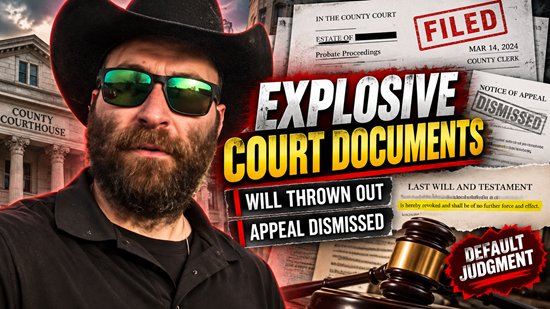
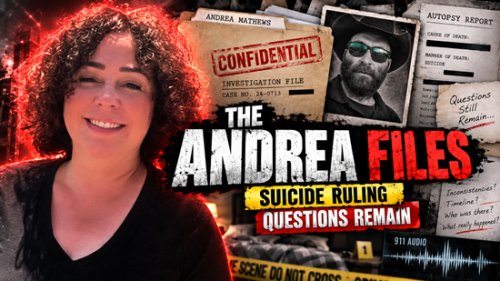
Georgia Transparency has also reviewed litigation involving the estate of Barthel’s late spouse, Andrea Katherine Mathews, in Mitchell County, North Carolina.

That litigation reportedly includes a contested or disputed will, discovery disputes, and questions surrounding Barthel’s conduct during the estate proceedings. Georgia Transparency previously reported that a March 2026 Superior Court order found Barthel failed to appear for a properly noticed deposition, raised objections the court characterized as frivolous, and acted in a manner intended to impede or avoid discovery. The reported order imposed monetary and evidentiary sanctions and compelled compliance.

A disputed will does not, standing alone, prove forgery, fraud, coercion, or criminal wrongdoing. Likewise, discovery sanctions do not establish responsibility for Andrea Mathews’ death. They are nevertheless significant matters of public record when evaluating the credibility, transparency, and litigation conduct of a person who has chosen to become a public commentator.

Georgia Transparency has not established that Barthel caused Mathews’ death or committed any crime connected to it. The relevant story is that serious estate disputes, contested documents, and court-ordered discovery issues remain matters worthy of accurate reporting—not speculation and not censorship.

Copyright Law Is Not a Reputation-Management Tool

Copyright exists to protect original expression. It is not designed to erase criticism, conceal court records, suppress unfavorable reporting, or remove a news story merely because the subject dislikes how public material was used.

A person cannot voluntarily broadcast from a courthouse, inject himself into public controversies, and then reasonably demand that every journalist obtain permission before showing a brief excerpt of that broadcast for criticism and analysis.

The disputed clip showed the very activity being discussed. Its evidentiary value was tied to Barthel’s appearance, location, statements, and public presentation. Georgia Transparency used the excerpt to report on Barthel—not to pirate his program.

The timing and scope of the takedown therefore raise an unavoidable question:

Was the copyright system invoked to protect a creative work—or to remove scrutiny of the person who created it?

That question deserves an answer, especially when the claimant targeted a limited excerpt embedded inside a substantially original report about pending criminal allegations, interstate court proceedings, and a contested estate.

Georgia Transparency Will Challenge the Removal

Georgia Transparency maintains a good-faith belief that its use of the excerpt was protected by fair use and that the removal resulted from mistake or misidentification.

The organization intends to pursue the remedies available through YouTube, including requesting retraction and evaluating a formal counter-notification. A counter-notification is a legal process and may require the claimant either to permit restoration of the video or provide evidence of a filed court action seeking to restrain its publication.

Georgia Transparency will not be intimidated by the use of an automated takedown system. It will continue reporting from public records, court documents, recorded statements, and matters of legitimate public concern.

Barthel is entitled to dispute the reporting. He is entitled to provide evidence, request factual corrections, retain counsel, and defend himself in every court proceeding.

What he is not entitled to do is convert copyright law into a private censorship mechanism.

The public record remains the public record. A copyright strike cannot rewrite it.

Share

What's Your Reaction?

Like Like 3
Dislike Dislike 0
Love Love 0
Funny Funny 0
Angry Angry 2
Sad Sad 1
Wow Wow 5