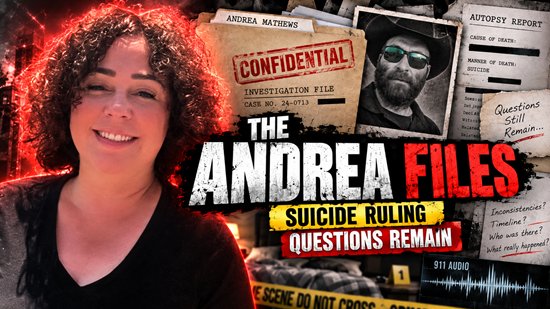
INSIDE THE ANDREA MATHEWS FILES: SUICIDE RULING, TROUBLING SCENE DETAILS, CLEAN TOXICOLOGY — AND QUESTIONS THAT REMAIN
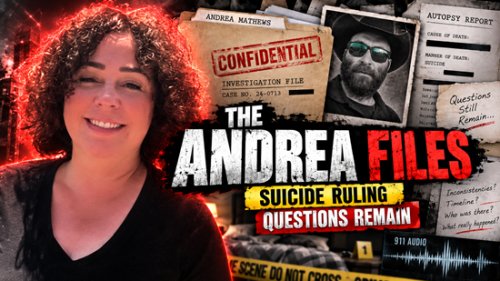
Official records classify Andrea Mathews’s death as suicide. But the medical examiner files document unusual circumstances, a moved body, questions about the scene, marital turmoil, and a toxicology screen showing no detected alcohol or targeted substances.
SPRUCE PINE, NORTH CAROLINA — The official conclusion is clear.
Andrea Mathews died from a gunshot wound to the head on May 30, 2025, and her death was ultimately classified as a suicide.
But when the underlying medical examiner records are examined closely, the story becomes far more complicated.
The files contain details that deserve serious public scrutiny: law enforcement concerns significant enough to request an autopsy, what the medical examiner described as confusing information from Andrea’s husband, a body that had been moved before authorities completed their investigation, unusual scene circumstances, evidence consistent with self-infliction, a handwritten letter describing serious turmoil in Andrea’s marriage—but reportedly containing no explicit statement that she intended to kill herself—and a toxicology report showing no ethanol detected and no substances detected on the laboratory’s targeted screen.
None of those facts, individually or collectively, overturn the official suicide determination.
But they do reveal that this was never as simple as a one-line death certificate.
These are the Andrea Mathews files.
And they deserve to be read carefully.
THE OFFICIAL RULING: SUICIDE
Andrea Mathews died on May 30, 2025.
The autopsy describes a contact gunshot wound to the head.
The entrance wound was documented on the right side of the frontal scalp. The projectile traveled generally right-to-left, back-to-front and upward before exiting through the left frontal region of the head.
No projectile remained in the body for recovery.
Ultimately, the medical examiner certified Andrea’s manner of death as suicide.
The autopsy record also reflects that the pathologist later communicated with the investigating Mitchell County detective and recorded that there was no suspicion of another manner of death at that point in the investigation.
That official determination must be acknowledged.
But it is not the only thing contained in the file.
LAW ENFORCEMENT WANTED AN AUTOPSY
One of the most important details in the medical examiner investigation is why the case received additional scrutiny in the first place.
The investigation documentation indicates that law enforcement requested an autopsy because of what were characterized as confusing answers from Andrea’s husband.
That does not establish criminal conduct.
It does establish that investigators apparently had enough questions about the circumstances to want a forensic examination rather than treating the matter as entirely routine.
According to the investigation narrative, Andrea’s husband reported finding her after he had been showering.
The report also indicates that her body had been moved and that CPR was reportedly attempted.
Authorities documented Andrea in what was described as an unusual or odd position.
Again, none of that proves homicide.
But those details matter because movement of a body before a scene is fully documented can complicate reconstruction of what happened.
THE BEDROOM SCENE
The investigation described Andrea on or near the bed.
A firearm was documented on the bed.
A cartridge casing was reportedly located between the bed and wall.
There was blood beneath Andrea’s head.
Authorities observed an entrance and exit wound.
Those facts became part of the scene investigators had to reconstruct.
And the records also contain physical observations that support the official suicide determination.
Investigators documented what they described as blood spatter on Andrea’s right hand, gunshot residue on her right thumb, and what was described as a trigger impression on her right index finger.
Those are significant observations.
They cannot simply be ignored by anyone examining this case.
If accurately documented and interpreted, they are evidence potentially consistent with Andrea having fired the weapon herself.
That is precisely why this story should not be reduced to a predetermined conclusion in either direction.
There is evidence investigators regarded as supportive of suicide.
There are also circumstances that caused investigators to ask questions.
Both can be true.
THEN THERE IS THE LETTER
Investigators also recovered a lengthy handwritten document.
According to the medical examiner investigation, the writing consisted of approximately 14 pages, with entries beginning around May 20.
The contents reportedly described serious problems inside Andrea’s marriage.
According to the investigation summary, Andrea wrote about discovering that her husband was cheating and about allegations involving photographs of her being distributed or sold online.
The writings also reportedly addressed what Andrea wanted done with certain belongings in the event of her death.
That obviously creates important context.
But there is another detail that cannot be overlooked:
According to the medical examiner investigation, the writings did not contain an explicit statement of suicidal intent or self-harm.
That distinction matters.
A document discussing property after death is not automatically a suicide note.
A document describing marital turmoil is not automatically evidence of homicide either.
The contents must be evaluated for what they actually say.
And according to the official investigation summary, the writing apparently did not contain an explicit declaration that Andrea intended to take her own life.
THE TOXICOLOGY REPORT
Then comes the toxicology.
The North Carolina Office of the Chief Medical Examiner issued its toxicology report on June 23, 2025.
Postmortem specimens included blood, liver, vitreous humor, urine and gastric contents.
The explicit testing results reported on the aortic blood sample were:
ETHANOL: NONE DETECTED
and
TARGETED SCREEN: NONE DETECTED
That finding is important.
There was no detected alcohol in the tested postmortem blood sample.
And nothing was detected on the laboratory’s reported targeted screen.
What does that mean?
It means exactly what the laboratory reported: alcohol was not detected in that specimen, and the targeted toxicology screen was negative.
What it does not prove is that Andrea never drank alcohol historically.
It does not establish whether she ever suffered from alcohol-use problems.
It does not establish her mental state.
And by itself it cannot answer whether she was suicidal.
But it does establish one objective fact:
The toxicology laboratory did not detect ethanol in Andrea Mathews’s tested blood following her death.
That matters whenever claims are made suggesting she was intoxicated at the time.
CPR: WHAT THE AUTOPSY DOES — AND DOES NOT — SAY
Another issue surrounding the case has been the reported attempt at CPR.
Some public narratives have gone much further than the official records and claimed that an absence of broken ribs or chest trauma proves CPR was fabricated.
That conclusion is not contained in the autopsy.
The autopsy does not make a forensic finding that CPR was “faked.”
It does not accuse anyone of pretending to perform resuscitation.
And the absence of rib or sternal fractures, standing alone, does not establish that chest compressions never occurred.
What the record can tell us is what injuries were present.
What it cannot responsibly tell us without additional evidence is what was happening in another person’s mind during the emergency call.
That distinction is critical.
THE CASE CONTAINS EVIDENCE POINTING IN DIFFERENT DIRECTIONS
This is where the Andrea Mathews story becomes difficult.
On one side of the record:
There is a contact gunshot wound.
There are scene observations involving Andrea’s hand that investigators considered potentially consistent with firing a weapon.
There was reportedly gunshot residue on her thumb.
There was a reported trigger impression on a finger.
And the medical examiner ultimately classified the death as suicide.
Those are significant facts.
But elsewhere in the same investigative record:
Law enforcement sought an autopsy because questions existed.
The husband’s answers were reportedly described as confusing.
Andrea’s body had been moved.
The positioning was described as unusual.
Her writings documented serious marital turmoil.
Those writings reportedly contained no explicit suicidal declaration.
And toxicology showed no detected alcohol and nothing detected on the targeted screen.
Those facts do not automatically overturn the suicide ruling.
But neither should they simply disappear from public discussion.
QUESTIONS ARE NOT ACCUSATIONS
There is a line investigative journalism must not cross.
Asking what the records show is legitimate.
Claiming the records prove something they do not is not.
The medical examiner did not rule Andrea’s death a homicide.
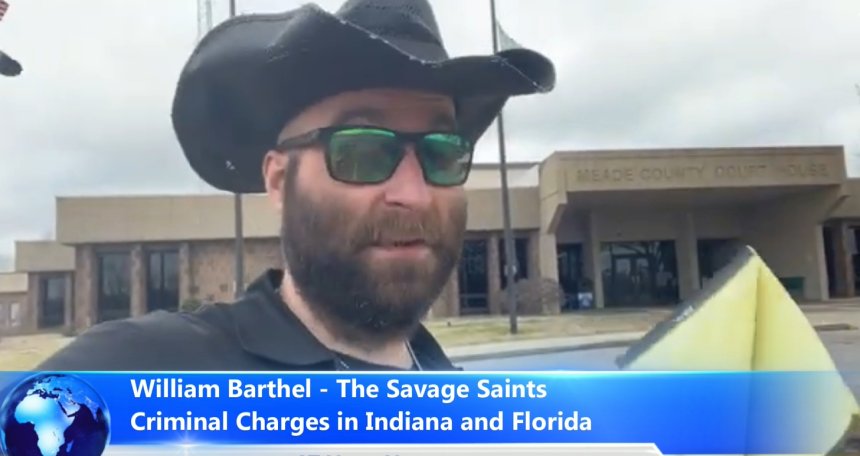
The autopsy does not identify William Barthel or anyone else as having killed her.
These records do not establish murder.
Anyone reporting otherwise as established fact would be going beyond the documents.
But acknowledging that is not the same as saying there is nothing worth examining.
There clearly is.
Why did investigators initially have questions?
Precisely what did Andrea write in the complete 14-page document?
What does the complete 911 recording reveal?
What did responding deputies see before anything at the scene was disturbed?
What photographs were taken?
Was formal GSR laboratory testing performed beyond the observations recorded in the investigation narrative?
What did firearm examination establish?
What was the precise original positioning of Andrea’s body?
What happened between the time of the gunshot and the arrival of emergency personnel?
Those are factual questions.
And factual questions deserve factual answers.
WHAT THE REAL RECORDS SAY ABOUT SOME ONLINE CLAIMS
Another reason these documents matter is that they allow the public to separate legitimate evidence from claims that may have grown substantially in retelling.
Some allegations circulated online about Andrea’s death appear much stronger than the official documentation currently supports.
The actual medical examiner records support the negative toxicology results.
They support the existence of unusual circumstances documented during the death investigation.
They support serious marital turmoil contained in Andrea’s writings.
They support that investigators requested an autopsy.
But the records reviewed here do not establish that anyone shaved hair to intentionally destroy gunshot residue.
They do not establish that somebody deliberately washed away blood evidence.
They do not conclude that CPR was staged.
They do not classify Andrea’s death as an intimate-partner homicide.
And they do not identify an SBI determination that the scene was staged as suicide.
If additional official records establish any of those things, those records should be produced and examined.
Until then, allegations should remain allegations.
THE DOCUMENT THAT MAY MATTER MOST IS THE 911 CALL
One of the most important pieces of evidence still missing from the public picture is the complete, unedited 911 recording.
Emergency calls can provide a contemporaneous record of what a caller says happened, what the dispatcher instructs the caller to do, whether CPR instructions are given, whether circumstances change during the call and what background sounds are present.
That recording should be evaluated alongside the written investigative report—not through edited clips or secondhand descriptions.
The same is true for body-camera footage and crime-scene photographs.
They could answer questions that written summaries simply cannot.
ANDREA MATHEWS DESERVES MORE THAN INTERNET RUMOR
Andrea Mathews was a human being.
Her death should not become ammunition in an online feud.
If her death was suicide, the evidence should withstand scrutiny.
If investigators missed something, documentary evidence is how that should be demonstrated.
If allegations circulating online are false or exaggerated, the official records should expose that too.
Either way, the answer is the same:
Follow the documents.
The autopsy.
The medical examiner investigation.
The toxicology.
The 911 call.
The crime-scene evidence.
The photographs.
The firearm evidence.
The contemporaneous statements.
Not rumor.
Not hashtags.
Not theories presented as conclusions.
THE OFFICIAL FINDING REMAINS SUICIDE — BUT THE FILE IS WORTH READING
Nothing reviewed here changes the official determination.
Andrea Mathews’s death remains classified as suicide in the medical examiner records.
That is the government's conclusion.
But the files reveal considerably more than the word printed in the “manner of death” box.
They reveal an investigation containing unusual circumstances.
A moved body.
Questions surrounding the scene.
Evidence considered supportive of self-infliction.
A marriage in apparent crisis.
A handwritten document discussing what should happen after Andrea’s death but reportedly containing no explicit suicidal declaration.
And toxicology showing no detected ethanol or targeted substances.
That does not prove murder.
It does prove that Andrea Mathews’s story is more complex than the single word “suicide.”
And that is why the records matter.
Georgia Transparency will continue seeking the underlying public records and reporting what those documents actually establish—wherever the evidence leads.
RELATED: Our separate investigation into the litigation surrounding Andrea Mathews’s estate and the purported will later invalidated by the court can be read here: Will Thrown Out.
T O X I C O L O G Y R E P O R T
Office of the Chief Medical Examiner Toxicology Folder: T202506035
Raleigh,NC 27699-3025 Case Folder: F202506512
Date of Report: 23-jun-2025
DOD: 30-may-2025
Page: 1
DECEDENT: Andrea Matthews
Status of Report: Approved
Report Electronically Approved By: Rachel Lindenberger, PhD
* * *
** Comments Concerning This Report **
A25-0593
** End of Comments Concerning This Report **
===============================================================================
SPECIMENS received from Jerri L. McLemore on 06-jun-2025
S250017794: 20.0 ml Blood CONDITION: Postmortem
SOURCE: Aorta OBTAINED: 02-jun-2025
Ethanol --------------------- None Detected 06/23/2025
Targeted Screen ------------- None Detected 06/23/2025
_______________________________________________________________________________
S250017795: 2.0 ml Blood CONDITION: Postmortem
SOURCE: Femoral Vessel OBTAINED: 02-jun-2025
_______________________________________________________________________________
S250017796: Liver CONDITION: Postmortem
SOURCE: Liver OBTAINED: 02-jun-2025
_______________________________________________________________________________
S250017797: 2.0 ml Vitreous Humor CONDITION: Postmortem
SOURCE: Eye OBTAINED: 02-jun-2025
_______________________________________________________________________________
T O X I C O L O G Y R E P O R T
Office of the Chief Medical Examiner Toxicology Folder: T202506035
Raleigh, NC 27699-3025 Case Folder: F202506512
Date of Report: 23-jun-2025
DOD: 30-may-2025
Page: 2
Decedent: Andrea Matthews
* * *
SPECIMENS received from Jerri L. McLemore on 06-jun-2025 (Continued)
_______________________________________________________________________________
S250017798: 13.0 ml Urine CONDITION: Postmortem
SOURCE: Urinary Bladder OBTAINED: 02-jun-2025
_______________________________________________________________________________
S250017799: 20.0 ml Gastric Contents CONDITION: Postmortem
SOURCE: Stomach OBTAINED: 02-jun-2025
_______________________________________________________________________________
Accredited by the College of American Pathologists,
Laboratory Accreditation Program.
092226 22:34 * * * E N D O F R E P O R T * * *
Files
Share
What's Your Reaction?
 Like
4
 Dislike
0
 Love
0
 Funny
0
 Angry
0
 Sad
0
 Wow
0