
COURT RECORDS BLOW OPEN ANDREA MATHEWS ESTATE FIGHT: PURPORTED WILL INVALIDATED, DEFAULT JUDGMENT ENTERED AGAINST WILLIAM BARTHEL, APPEAL DISMISSED
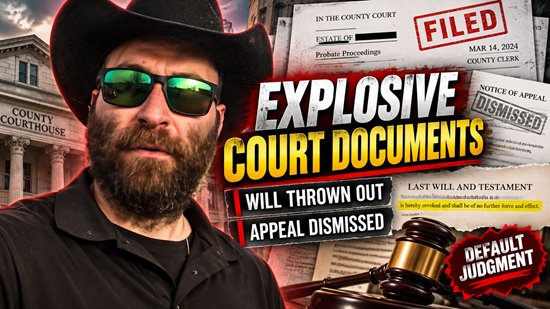
Verified caveat alleged undue influence, duress — and, alternatively, forgery. The court later deemed those allegations established for purposes of the estate case and ruled the document was not Andrea Mathews’s last will and testament.

MITCHELL COUNTY, NORTH CAROLINA — Newly reviewed court records in the Estate of Andrea Katherine Mathews reveal a far more serious legal history than a simple disagreement over inheritance.
The documents show that the paper William Joseph Barthel supported as Andrea Mathews’s Last Will and Testament was challenged by one of her sons, hit with allegations of undue influence, duress, and alternatively forgery, and ultimately annulled by a Mitchell County Superior Court judge after default judgment was entered against Barthel as a discovery sanction.
And when Barthel tried to appeal the sanctions and default judgment, that appeal was later dismissed after the court found that required appellate steps were not completed.
This is not internet rumor.
This is not a social-media accusation.
These are filed court records.
Andrea Katherine Mathews died on May 30, 2025, in Mitchell County, North Carolina. According to the verified Caveat Petition filed by her son Maxwell Woody, a document dated January 26, 2024 was later offered for probate as Andrea’s Last Will and Testament.
That document would have given William Barthel an extraordinary degree of control over Andrea’s estate.
The purported will gave Barthel Andrea’s tangible personal property, including vehicles, pets, boats, farm equipment and machinery.
It also gave him her intangible personal property, including bank accounts, retirement accounts and Morgan Stanley accounts.
It gave him Andrea’s real property.
It gave him the residue of her estate.
And it appointed Barthel as executor.
But Andrea’s son challenged the document.
And the allegations were explosive.
THE CAVEAT: UNDUE INFLUENCE, DURESS — AND ALTERNATIVE FORGERY
On August 22, 2025, Maxwell Woody filed a verified Caveat Petition challenging the January 26, 2024 document.
The petition alleged that Barthel procured Andrea Mathews’s execution of the document through undue influence and duress.
Then it went further.
The petition alleged, in the alternative, that the signature purporting to be Andrea Mathews’s signature was a forgery.
Paragraph 18 of the petition repeated the three legal theories:
Barthel allegedly procured the document through undue influence.
Barthel allegedly procured the document through duress.
And, alternatively, Andrea Mathews’s signature on the document was allegedly forged.
Those allegations were not initially findings of guilt or criminal wrongdoing. They were allegations presented in a verified civil probate proceeding.
But what happened next gave them substantially greater legal significance.
THE COURT ORDERS BARTHEL TO SIT FOR A DEPOSITION
The court record shows that Woody served Barthel with written discovery in October 2025.
According to the later sanctions order, Barthel responded with blanket objections and failed to fully respond to document-production requests. The court eventually entered an order compelling additional production.
Then came the deposition.
The court found that Barthel stated he would not appear for the noticed deposition unless a judge specifically ordered him to do so.
The judge later characterized Barthel’s objections as “frivolous” and found that his refusal to appear amounted to a willful disregard of the North Carolina Rules and applicable law intended to impede and avoid deposition before trial.
That is unusually strong language from a court.
The judge also found that Barthel’s refusal substantially prejudiced Woody’s ability to prepare for trial.
FIRST SANCTIONS: $6,487.50
The court responded with sanctions.
Barthel was ordered to appear for deposition and was ordered to pay $6,487.50 in expenses and attorneys’ fees.
The court also warned that failure to comply could ultimately result in default judgment concerning the purported will.
That warning would become reality.
ARREST, MISSED DEPOSITION AND ANOTHER BREAKDOWN
The court’s later findings state that Barthel was arrested in Jefferson County, Florida, on March 19, 2026.
A deposition had been scheduled for March 26.
According to the court, opposing counsel arrived at the Mitchell County Courthouse to find the videographer and court reporter already set up.
Only shortly before the scheduled deposition was counsel informed that Barthel was in custody in Florida awaiting extradition to Indiana.
The judge did not simply punish Barthel for being incarcerated.
What mattered next was what happened after his release.
The court found Barthel was bonded out on April 13, 2026. The following day, Woody’s attorney emailed asking to schedule a new deposition.
The judge found that Barthel nevertheless failed to reasonably communicate or cooperate with opposing counsel to reschedule his court-ordered deposition before trial.
The court also found that Barthel had failed to pay any portion of the earlier $6,487.50 sanctions award.
At that point, the case took a devastating turn for Barthel.
DEFAULT JUDGMENT
On April 30, 2026, the Mitchell County Superior Court filed a Sanctions Order Entering Default Judgment against William Joseph Barthel.
The court concluded that lesser sanctions would not be sufficient.
Then the judge issued the ruling that changed the entire estate case.
The court ordered that:
“the facts and matters alleged in the verified Caveat Petition are deemed to be true and taken to be established for the purposes of this action.”
That language matters.
The verified caveat contained the allegations of undue influence, duress and, alternatively, forgery.
The court then entered default judgment in Woody’s favor and against Barthel.
It annulled probate of the January 26, 2024 document.
It expressly adjudicated that the document “is not the last will and testament of Andrea Katherine Mathews.”
And it ordered Andrea’s estate to pass by intestate succession to her heirs under North Carolina law.
Barthel was also ordered to pay an additional $1,430 in costs and attorneys’ fees related to the failed deposition.
THE WILL WAS OUT
The legal result is unmistakable.
The January 26, 2024 paper Barthel had supported as Andrea Mathews’s will did not survive the litigation.
Its probate was annulled.
The court ruled it was not Andrea Mathews’s Last Will and Testament.
And the estate was redirected to intestate succession.
That does not mean a criminal jury convicted Barthel of forgery.
It does not mean a forensic handwriting expert testified at trial and proved the document was forged.
And it does not mean the judge issued a separate criminal finding of “probate fraud.”
What it does mean is powerful enough:
The will was challenged on allegations of undue influence, duress and alternative forgery; Barthel repeatedly failed to comply with discovery obligations; default judgment was entered against him; the caveat’s allegations were deemed established for purposes of the estate action; and the purported will was invalidated.
That distinction matters.
But so does the outcome.
THEN BARTHEL APPEALED
Barthel attempted to appeal the sanctions and default judgment.
He filed his Notice of Appeal on May 8, 2026.
But the appellate process did not proceed.
Judge Theodore W. McEntire later found that Barthel failed to timely serve a transcript contract and failed to serve a proposed record on appeal.
The court further found no compliance, no waiver of the deadline, and no good cause justifying an extension.
The result?
On September 14, 2026, the court ordered that the appeal of the default judgment and sanctions order be dismissed.
So the chronology now speaks for itself:
Will challenged.
Undue influence alleged.
Duress alleged.
Alternative forgery alleged.
Discovery disputes.
Sanctions entered.
Court order violated.
Default judgment entered.
Caveat allegations deemed established for the estate case.
Purported will annulled.
Estate sent to Andrea’s heirs by intestacy.
Appeal dismissed.
That is not a small probate dispute.
That is a complete collapse of Barthel’s attempt to preserve the document he supported as Andrea Mathews’s will.
THE TIMELINE AROUND THE DOCUMENT DESERVES ATTENTION
The Caveat Petition contains another sequence that deserves close scrutiny.
It states that Barthel was arrested on charges of disrupting an official meeting and resisting a public officer on January 16, 2024.
According to the petition, he was released the following day.
That same day—January 17—Andrea executed a General Power of Attorney naming Barthel her attorney-in-fact.
The petition further alleges that the attorney representing Barthel in his criminal matters prepared and notarized that power of attorney.
Nine days later, on January 26, the disputed will was executed.
The Caveat Petition alleges the same attorney representing Barthel in his criminal matters prepared and notarized that document as well.
Those circumstances were among the matters placed before the estate court.
WHAT THE RECORD DOES — AND DOES NOT — PROVE
There is an important responsibility when reporting court documents this serious.
The record supports saying that the purported will was invalidated.
It supports saying its probate was annulled.
It supports saying the court ruled it was not Andrea Mathews’s last will and testament.
It supports reporting that the Caveat Petition alleged undue influence, duress and alternative forgery.
And it supports reporting that the court later deemed the facts and matters alleged in that petition established for purposes of the estate proceeding.
What the available orders do not establish is a separate criminal conviction for forgery, fraud or homicide.
Those are different legal questions.
The power of this story comes from reporting exactly what the court did—not exaggerating it.
And what the court actually did is remarkable.
ANDREA’S ESTATE WILL NOT PASS UNDER THE BARTHEL DOCUMENT
The practical consequence is enormous.
Under the purported will, Barthel stood to receive Andrea’s real property, financial accounts, personal property and residue of the estate, while also serving as executor.
After the default judgment, that framework was wiped away.
The probate of the document was annulled.
Andrea’s estate was ordered to pass through intestate succession instead.
The court record therefore leaves one unavoidable conclusion about the estate case:
William Barthel did not succeed in preserving the January 26, 2024 document as Andrea Mathews’s will.
The document was challenged.
The challenge escalated.
Barthel was sanctioned.
Default judgment was entered.
The will was invalidated.
And his attempted appeal was dismissed.
For anyone following the death of Andrea Katherine Mathews and the legal battle over what happened to her property afterward, these records deserve very serious attention.
Because buried inside hundreds of pages of court filings is a story far bigger than a routine probate disagreement.
It is the story of a purported will that would have placed virtually everything in the hands of one man.
A son who challenged it.
Allegations of coercion and forgery.
Repeated discovery battles.
A judge who eventually said enough was enough.
A default judgment.
A will thrown out.
And an appeal that never made it forward.
Georgia Transparency will continue examining the public record surrounding the Estate of Andrea Katherine Mathews and separating documented court findings from accusation, speculation and rumor.
Files
Share
What's Your Reaction?
 Like
3
 Dislike
0
 Love
3
 Funny
0
 Angry
0
 Sad
0
 Wow
0














Good job GT.